.png)

100 Million Seeds From Native Plants Are Released Into the Brazilian Amazon by Daring Skydiver

Meet Lilli, the High-end German Call Girl Who Became Barbie
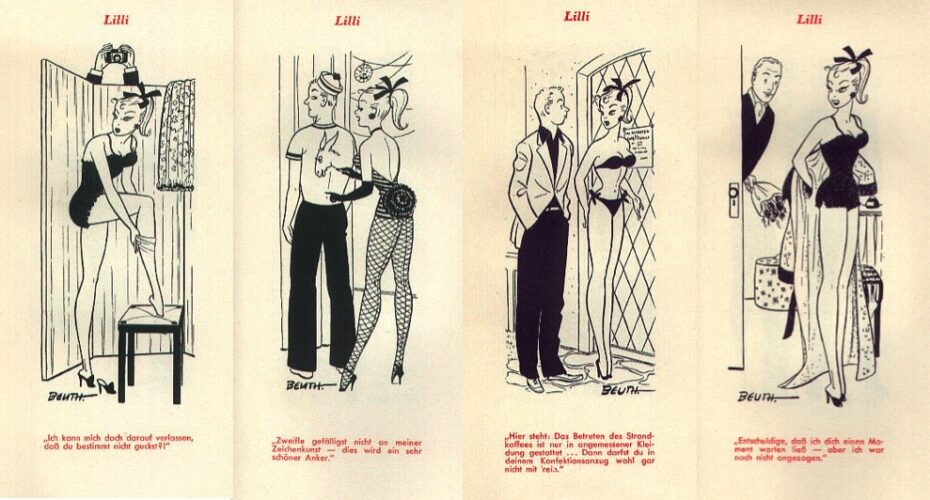
So it turns out Barbie’s original design was based on a German adult gag-gift escort doll named Lilli. That’s right, she wasn’t a dentist or a surgeon, an Olympian gymnast, a pet stylist or an ambassador for world peace. And she certainly wasn’t a toy for little girls…
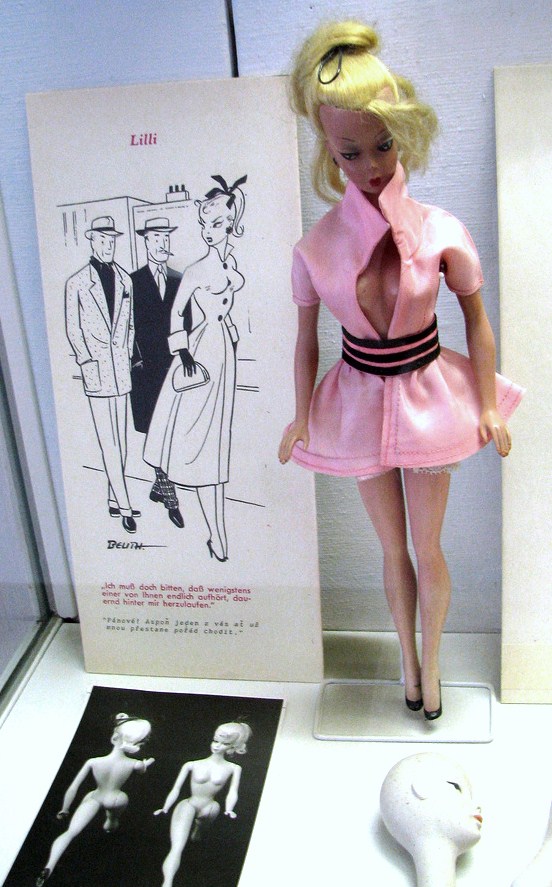
Lilli on display at the Barbie Museum in Prague
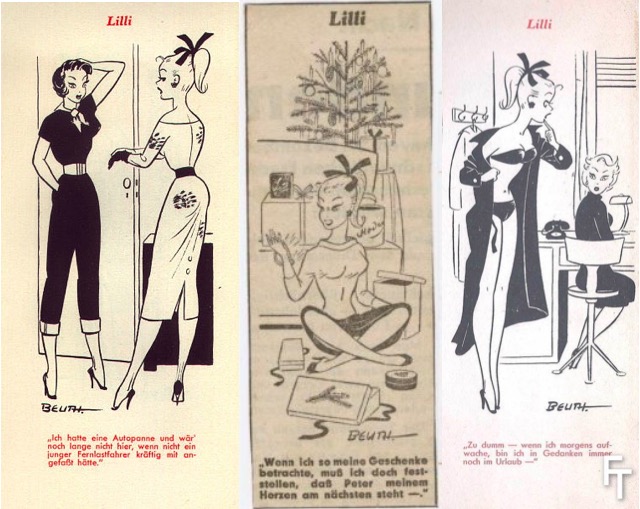
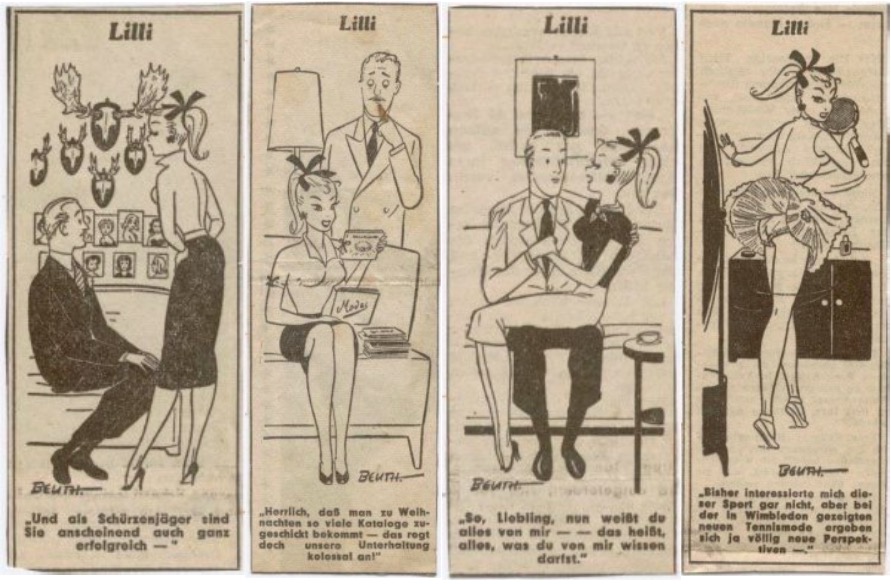
Unbeknownst to most, Barbie actually started out life in the late 1940s as a German cartoon character created by artist Reinhard Beuthien for the Hamburg-based tabloid, Bild-Zeitung. The comic strip character was known as “Bild Lilli”, a post-war gold-digging buxom broad who got by in life seducing wealthy male suitors.

She was famously quick-witted and known to talk back when it came to male authority. In one cartoon, Lilli is warned by a policeman for illegally wearing a bikini out on the sidewalk. Lilli responds, “Oh, and in your opinion, what part should I take off?”
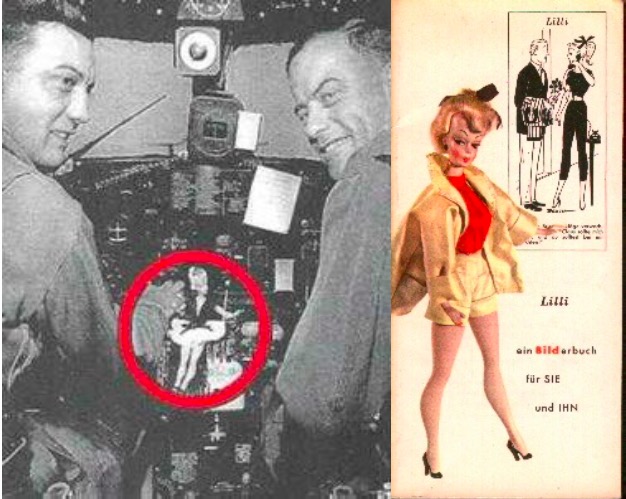
She became so popular that in 1953, the newspaper decided to market a three-dimensional version which was sold as an adult novelty toy, available to buy from bars, tobacco kiosks and adult toy stores. They were often given out as bachelor party gag gifts and dangled from a car’s rearview mirror.
Fondation Tanagra
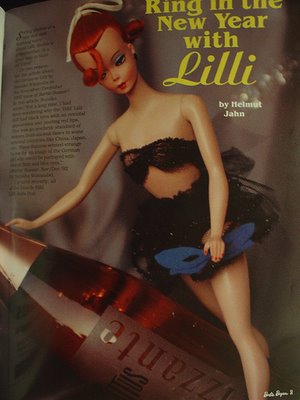
Parents considered the doll inappropriate for children and a German brochure from the 1950s described Lilli as “always discreet,” and with her impressive wardrobe, she was “the star of every bar”. She did indeed have such a wide range of outfits and accessories you could buy for her, that eventually little girls began wanting her as a playdoll too. While toy factories tried to cash in on her popularity with children, Lilli still remained a successful adult novelty, especially outside of Germany. A journalist for The New Yorker magazine, Ariel Levy, later referred to Lilli as a “sex doll”.

In the 1950s, one of the founders of Mattel, Ruth Handler (pictured above), was travelling to Europe and bought a few Lilli dolls to take home. She re-worked the design of the doll and later debuted Barbie at the New York toy fair on March 9, 1959.
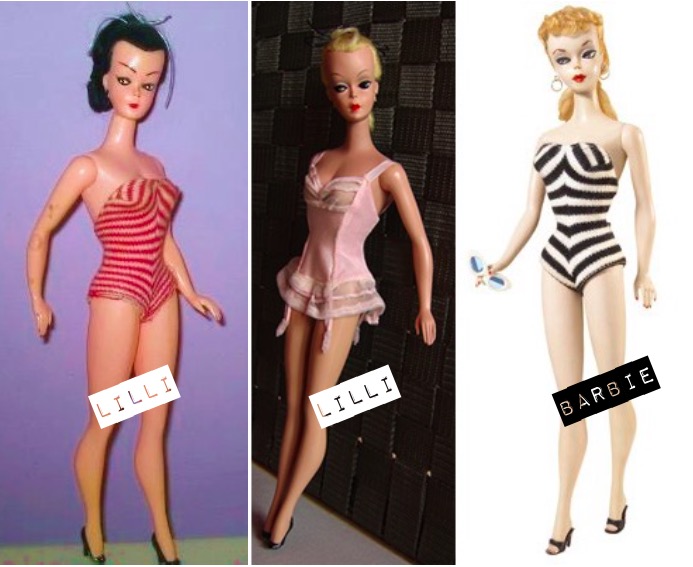
Mattel acquired the rights to Bild Lilli in 1964, and production of the German doll ceased. (Funny how Barbie’s lighter skin tone was just about the only noticeable change in the early days).

Fondation Tanangara
And the rest is a history you’re a little more familiar with, and no doubt one Mattel is a little more comfortable with…
So which version would you prefer? Barbie’s ballsy European precursor or Mattel’s squeaky clean lookalike?
Discover more fascinating history about Bild Lilli and Barbie’s history written by a former designer at Mattel.
How a Mechanical Chess-Playing Turk gave Birth to the AI Debate 250 Years Ago
As we traverse the world of modern digital technology from smart phones to artificial intelligence, the game of chess still captivates and challenges people the world over. Chess, it seems, has thrived due to the advancement in connectivity. But 200 years earlier, before this electronic wizardry, there was an automated, mechanical marvel that would transfix the world with its chess-playing prowess. ‘The Turk’, as it would be known, travelled the world for over 80 years, defeating, delighting and mystifying the masses with its spectral talent. The Mechanical Turk quickly became a symbol of technological innovation and sparked the same heated debates we’re having right now about the nature of artificial intelligence, the limits of human ingenuity, and the possibility of constructing a machine capable of replicating human thought. However, behind the Turk’s enigmatic facade lay a secret that would only be revealed decades later, by none other than the master of mystery himself, Edgar Allan Poe. Let’s dive into the unbelievable tale of a remarkable mechanical creation that continues to intrigue to this day…
Wolfgang von Kempelen was a Hungarian Civil servant, author, inventor, and devotee of Empress Maria Theresa of Austria. In 1769, he attended a royal performance at Schönbrunn Palace by Francois Pelletier, the French illusionist who performed a unique act involving the use of magnets to bewilder and entrance the audience. The court and the Empress were aghast by the spectacle. Von Kempelen was not. The attention of the monarch had been shifted to this encroaching conjuror. Not to be outdone, Von kempelen threw down the gauntlet and decided that he would return with a creation that would surpass even Pelletier’s performance.
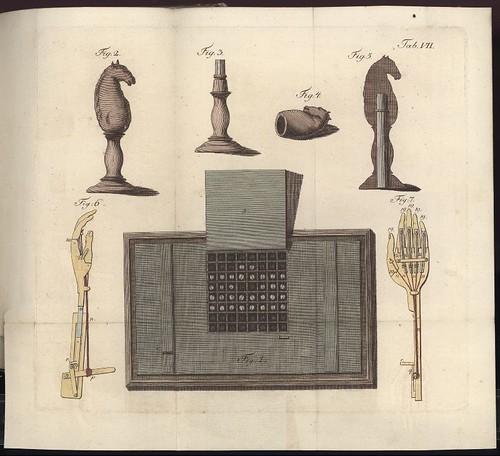
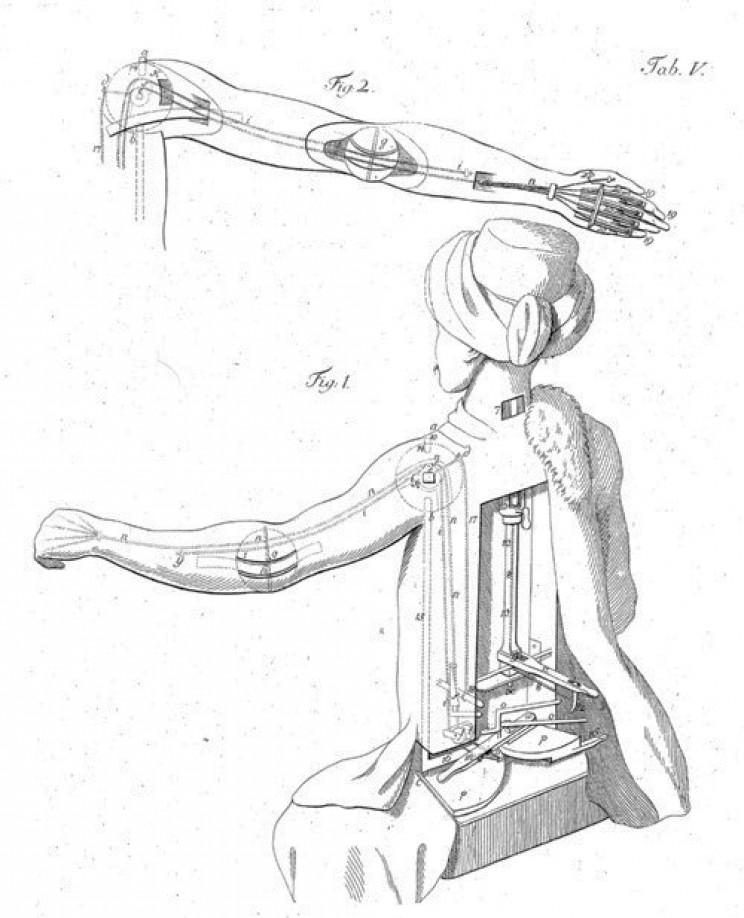
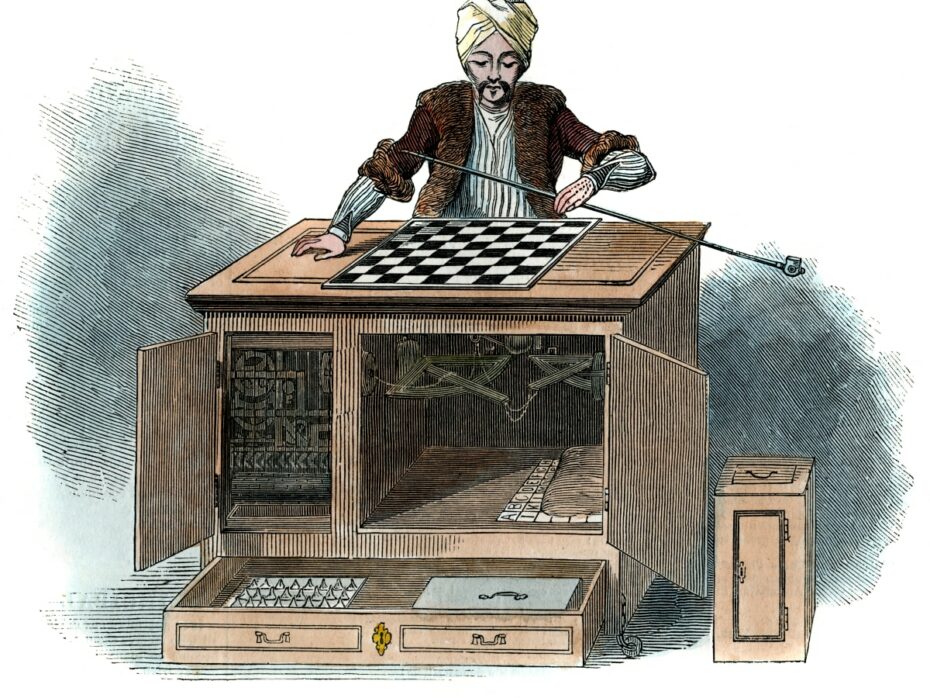
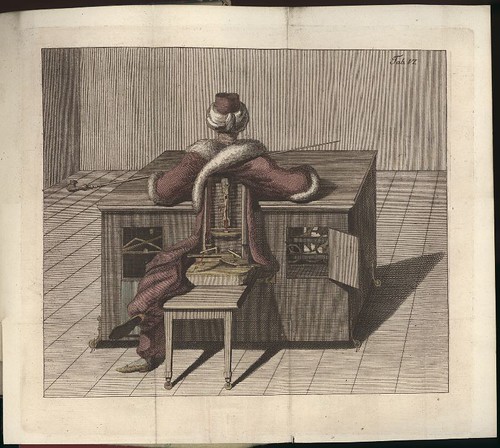
Von Kempelen retreated to his workshop, closed the doors and toiled away for 6 months, until finally, in 1770, he was ready to reveal his creation. What was unveiled perplexed the court; a motionless figure sitting at a large wooden cabinet overlooking a chessboard. The prone figure had the look of an Ottoman sorcerer; turban, and robes, even a long pipe, which he rested on a cushion. Von Kempelen declared his invention ‘The Turk’, an automaton Chess Player. He then proceeded to give the audience a tour of the machine, which included opening the cabinet to show the innards of the automaton and a demonstration of how it worked. A challenger was requested from the dignitaries at court and Count Ludwig von Cobenzl, a politician and keen chess player volunteered. Von Cobenzl was defeated by the automaton in under 30 minutes, and so was the next opponent and the next. The crowd was dumbfounded, this mechanical mystic seemed to be a master chess player. ‘The Turk’ performed his moves with his right hand, holding the pipe in his left. He would nod his head, three times if the king was in check, and twice if the queen was threatened. If his opponent tried to make an illegal move, ‘The Turk’, not to be fooled, would seemingly study the board and then move his opponent’s pieces back to the original spot. For its next trick, the curious contraption performed the Knights tour, a chess puzzle that requires the knight to occupy each square once on the board. The Court was amazed and more importantly for Von kempelen, so was the Empress.
The Turk was a hit and Von Kempelen was inundated with offers to display and tour his mechanical chess sorcerer. But for reasons that would later become apparent, Von Kempelen was hesitant to comply, and went as far as making excuses for the next decade as to why he couldn’t possibly exhibit his wondrous machine. Finally, Emperor Joseph II ordered Von Kempelen to Vienna to display the Turk and play the Grand Duke Paul of Russia. The appearance was such a hit that he was dispatched to Europe to great fanfare and success. In 1873, the tour began in France where Von Kempelen displayed his machine to crowds of people wanting to catch a glimpse of the mysterious mechanical chess master. The Turk even played Benjamin Franklin, then the ambassador to France. When the tour hit Paris, the automaton played one of the best chess players of the era, André Danican Philidor. It lost the match but Philidor said later “It was his most fatiguing game of chess ever!”
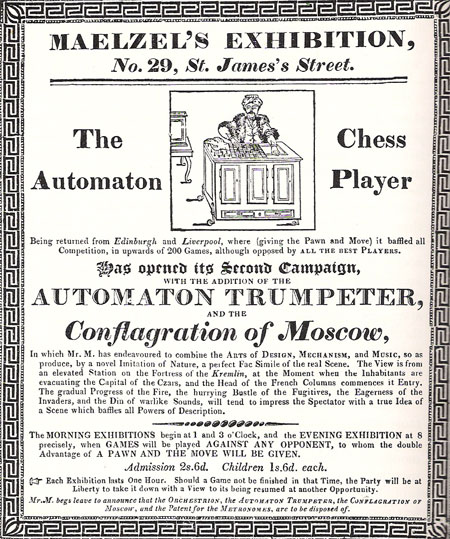
The tour of Europe continued, staying in London for a year, before bamboozling audiences in Dresden, Amsterdam and Potsdam. With fame though, came the doubters. The sceptics just could not believe a man could make a machine of such guile and skill. Articles and books were written with wild theories trying to expose Van Kempelen. When Von Kempelen died at the age of 70, it looked like the secrets of his invention would die with him. Until the musician, Johann Nepomuk Mälzel, purchased the Turk from Von Kemeplen’s son and the whole spectacle came to the public’s attention again. In 1809, the Turk would play maybe its most prestigious and unpredictable opponent, the self-proclaimed Emperor of France, Napoleon Bonaparte. The match was set at Schönbrunn Palace and Bonaparte, in an attempt to take the advantage, decided to play white. He then made three illegal moves, presumably to try and trick The Turk. Undeterred, the machine replaced the pieces in the original spot and continued, on the 3rd time, The Turk swept all the pieces off the board with his arm in a seemingly mechanised tantrum. Amused, Napoleon started the game a fresh, confident in his savoir-faire and chess prowess. He lost in 19 moves. The emperor seemed to take it well, more bemused than annoyed. Mälzel must have breathed a sigh of relief, because if Napoleon had found out that a man of even smaller stature than himself was hiding inside the machine all along, the musician may have lost his head.
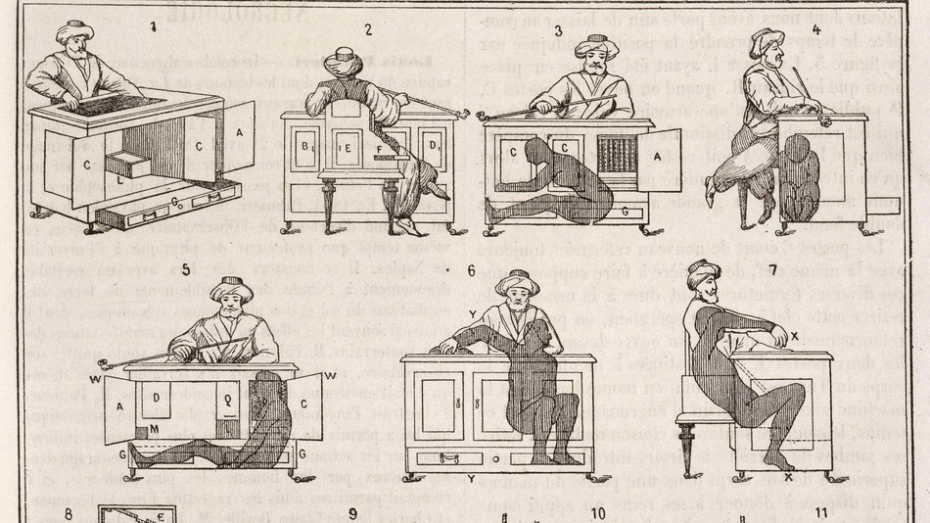
The ruse had begun with Von Kempelen, having seen the illusionist at the palace in Vienna. He had understood that the deception lay in the misdirection of his audience. He’d constructed the box so that an operator could hide inside and play the machine’s moves for it. The controller would have to be small enough to hide and a good enough chess player to beat most opponents. This must have been why Von Kempelen was so reticent in touring with his contraption; the availability of willing and miniature master chess players clearly presented a problem. How the trick worked is similar to the magician’s commonly seen box illusion. When the doors were opened, allowing the audience to inspect the insides, the operator would slide to different compartments on a moveable seat, which moved machinery into position. The cogs and gears were all for show and didn’t operate anything. The controller witnessed the game through magnets attached to the bottom of the pieces. A pegboard was used to keep track of the game and a system of pantographic levers were used to control ‘The Turks’ arm and hand to play his moves. On the outside, there had been fitted a revolving numbered disk so the operator could communicate in code, and a ventilation system so the smoke from a candle inside appeared to be dispersed through the Turks turban perhaps to replicate steam. Mälzel would also add a voice box to The Turk to say Échec, French for check, to add to its eerie quality.
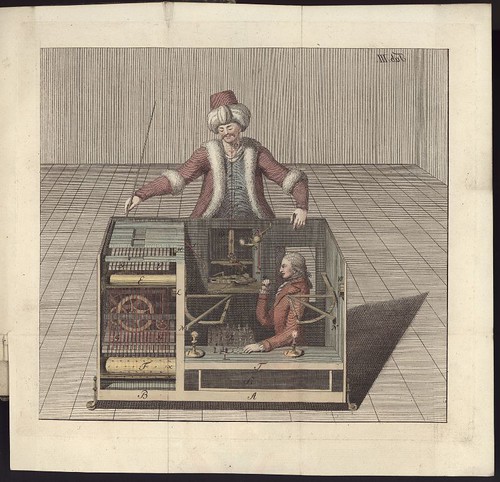
The original hidden chess master who played for Von Kempelen remains unknown, but when Mälzel bought The Turk, he had procured the assistance of Johann Baptist Allgaier an Austrian-German player who would pose as Mälzel’s private secretary on the tour. Other chess masters who would become involved include, Aaron Alexandre, William Lewis, Jacques Mouret, and William Schlumberger. In 1826, Mälzel and ‘The Turk’ would tour North America with Schlumberger at the controls; on this tour Edgar Allan Poe was witness to the event and would go on to write his essay an exposé of Mälzel’s chess player. Poe had studied the machine and claimed the pattern and emotive type of play could only be down to a sentient being. Either this, or he’d heard about the two boys in Boston who had seen Schlumberger sneaking out of the back of the cabinet. In America, Schlumberger would succumb to yellow fever, and then Mälzel would die on the return trip.
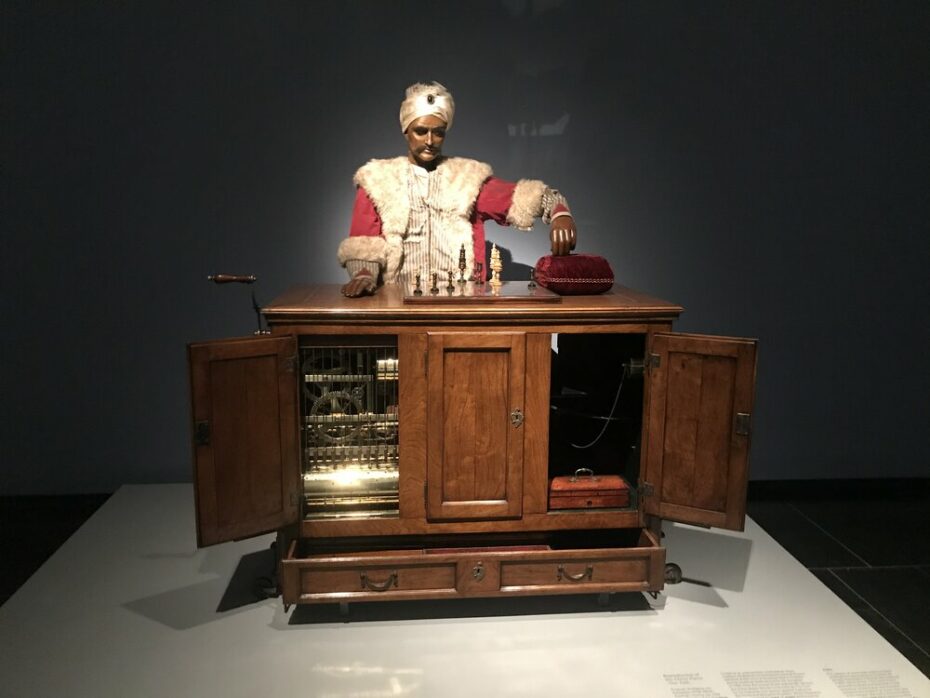
Interest in The Turk would eventually wain and it would pass through several hands before succumbing to a mysterious fire in a Chinese Museum. Von Kemeplen had constructed a machine when a fear of mysticism and magic would give way to the Industrial Revolution. The Turk though an automated hoax, would allow a peak behind the curtain of an eventual future when automation and artificial intelligence would emerge. In 1997, Deep Blue IBM’s supercomputer challenged and beat grandmaster Gary Kasparov. This would be the first time a machine would beat a current world champion without human assistance. Or did it?!
Words by Liam Ward


'Ghosts' of the Coal Mines

These horses or "pit ponies" were deprived of experiencing the sunlight and fresh air. Instead, they lived in darkness underground, relying on their instincts and the guidance of their human partners, known as conogons.
These horses were born, worked, and perished in the dark, enduring strenuous labor. It was not uncommon for a single horse to pull up to eight heavy coal wagons alone. Despite their challenging circumstances, these animals maintained their dignity and were aware of their rights, such as refusing to move if they felt burdened with excessive wagons. They also possessed a remarkable sense of time, knowing when their working day should end and finding their way back to the stables even in darkness. This demanding work of horses in the mines continued until 1972 when technology took over, marking the end of an era.
On December 3, 1972, Ruby, the last miner's horse, emerged from the mines in a grand fashion. Accompanied by an orchestra, Ruby, adorned with a flower wreath, was brought out of the darkness, symbolizing the conclusion of the era of mining horses and their connogon partners. To commemorate their shared labor underground, a sculptural composition named "Conogon" was erected within the Museum-Reserve "Red Hill".


Terracotta Warriors
Photographed in 1974, freshly excavated 2000 year old Terracotta warriors still showing the original color scheme before rapid deterioration. Rt Historical Artefacts

Rare Spotless Giraffe

A rare spotless giraffe born at Brights Zoo in Limestone, Tennessee, this summer captured hearts. Now, the newborn finally has a name. After asking the public to vote on a name for the baby, the zoo on Tuesday declared the winner. The giraffe will be called Kipekee, which means "unique" in Swahili.
The zoo announced the choice on Facebook, where, in a post last month, it asked people to choose between four symbolic names: Kipekee, which means "unique;" Firyali, which means "unusual" or "extraordinary;" Shakiri, which means "she is most beautiful" and Jamella, which means "one of great beauty."
The zoo received over 40,000 votes, and Kipekee won by a margin of 6,000 votes.
The Hasanlu Lovers
The 2,800-year-old Hasanlu Lovers were found in a bin in Iran. The two skeletons buried in ground appear to kiss each other. Other than the gender dispute, historians are not sure why they came to be in the bin - perhaps they were hiding during the final sacking of Hasanlu.

'A Helping Hand from the Media'
This might be one of the most famous images in photographic history.
The first ever X-ray image was taken in 1895 by Wilhelm Röntgen, who was awarded the first Nobel Prize in Physics in 1901.
The image of his wife Bertha's hand (wedding ring clearly visible) propelled Röntgen into an international celebrity. The medical implications were immediately realised. Röntgen named the discovery X-radiation, or X-rays, after the mathematical term 'X', which denotes something unknown.

Subscribe to:
Posts (Atom)