IMPAAKT Interviews Kayoko Mitsumatsu: Empowering Lives Through Yoga


Kayoko Mitsumatsu, a woman of action, decided to turn gratitude into action. Inspired by the transformative power of micro-loans, she envisioned a global movement where yoga practitioners could express their thanks by supporting underserved women and children in India. That’s how Yoga Gives Back (YGB) was born. Let’s dive deep to learn more about her and YGB.

Yoga. This Sanskrit word meaning “union” has transformed millions of lives, bringing strength, flexibility, and inner peace.  

But for Kayoko Mitsumatsu, its ripple effects extend far beyond that.  

For decades, she thrived in the fast-paced world of documentary filmmaking. But as she delved deeper into her yoga practice, a new calling emerged. She felt a deep sense of gratitude for the benefits yoga brought her, and a powerful urge to give back, especially to the birthplace of yoga – India.  

This potential led her to translate the philosophy of yoga into a global movement of giving back.  As a result, Yoga Gives Back was born in 2017. 

We at IMPAAKT connected with Kayoko to learn more about her journey and how Yoga Gives Back is empowering India’s women and children, creating sustainable lives. 

Here are the excerpts from the interview: 

What motivated you to transition from a successful career in television to founding Yoga Gives Back?  

Seventeen years ago, I started daily yoga practice and felt the strong inner calling to give back for the benefit I was receiving from this ancient tradition of YOGA from India. I was 47, and I felt I had worked enough in documentary filmmaking for three decades and it was not my life mission. During those days, I was making a documentary about micro-financing and learned how $15 can help the poorest person in developing countries. I learned that 6 billion dollars was spent on YOGA per year in the US alone, while 75% of the population in India still lived under the poverty line, earning $2 a day. It was so lopsided. I realized that “for the cost of yoga class in the West, you can change a life in India with microfinancing.”  I started sharing an idea of engaging yoga practitioners to give back just one class fee and everyone supported the idea right away, to my surprise. Apparently, many yoga communities were already looking for an opportunity to give back but there was no organized charity in the yoga community that focused on giving back to India to express our gratitude. This was how Yoga Gives Back (YGB) was born from a yoga studio in Los Angeles. Today, this movement of gratitude has now spread to 30 countries worldwide, empowering more than 3000 women and children with micro-loan and education programs annually.   

You’ve lived in many places throughout your life. How have these experiences shaped your perspective on the world and your work with Yoga Gives Back?  

My first experience outside of Japan was in Australia which left me one of the strongest impressions in my life at the age of 17. Growing up in Japan as a girl, I always wondered why my parents’ expectations were different for my brother and me. As a daughter, I was expected to wash dishes and help with my mother’s household chores, as well as changing schools every time my father’s business required relocation. My brother on the other hand did not have to do the same house chores and he never joined our relocation so he could continue the same elite education since elementary school. This was a fundamental question and frustration in my mind which was never answered properly because I was a girl. When I had an opportunity to live with families in Australia, I was so excited to witness how sons and daughters shared an equal amount of household chores to help parents. This was a life-changing experience for me. My deepest question in life was answered and I was right though nobody admitted it until then. Gender should not dictate who does household chores or who needs the best education. This was a life-changing experience for me because it gave me confidence that my fundamental questions were not irrelevant. Different values exist in other cultures beyond Japan, and this discovery truly enlightened me about the reality of the world that existed beyond Japan’s boundaries. Today, as a leader of a global campaign at Yoga Gives Back, it is one of my biggest responsibilities to work with yoga teachers and communities from around the world as well as partnering with NGOs (non-governmental organizations) in India. My early eye-opening experience in Australia taught me that different cultures exist with different values and customs whether good or bad. This conviction helps me to listen and learn from people from around the world and not to be judgmental about differences but rather appreciate differences and learn from them.   

You have been filming real stories for over a decade. Is there a particular story of a Yoga Gives Back recipient that has stayed with you the most? Why?  

In 2007, I met Guruprasad, a fifteen-year-old Indian boy in a poor neighbourhood, on the outskirts of bubbly Bangalore, India’s IT capital, during my first trip to India. His mother Jayashree just received micro-loans and shared her dream of giving her sons a good education. She only had elementary education due to her family’s poverty. I started filming this family’s story to follow Jayashree’s life with an economic opportunity with micro-loans to end the vicious cycle of poverty. However, as I returned to visit this family every year, it became evident that Guruprasad’s desire to become a doctor was beyond average. It was his mother’s dream and he also wanted to help his poor family and community that had no medical facilities. Witnessing his determination for his higher education to become a doctor, YGB decided to fund his education until he became a doctor. He continued to beat all odds, entered medical college, and advanced to a master’s degree to become a dental oncological surgeon. I was speechless in 2019 when he told me, “I am a seed. Yoga Gives Back is water. You watered this seed to grow into a tree. Now this tree can shelter thousands of people thanks to Yoga Gives Back’s support.” Coming from such a humble background, yet always holding a highly spiritual standard, Guruprasad has taught me so much about dedication to reach his life goals with altruistic motives. His success with higher education also inspired us to create our SHE (Scholarship for Higher Education) which now funds 440 disadvantaged youths with five-year scholarships so they can aim to get college degrees. We are now seeing hundreds of Guruprasad’s prodigies in the world, who are becoming change-makers in the communities.   

Running a global organization comes with its own challenges. What has been the most rewarding aspect of Yoga Gives Back for you? On the flip side, what has been the biggest challenge?  

The most rewarding aspect of YGB’s work is to be able to connect with yoga practitioners from around the world who believe in our mission of giving back with gratitude. YGB’s work engages the most wonderful human beings, like-minded brothers and sisters, most of whom I only met online or through emails. I am really blessed to have this incredibly powerful global community behind our mission which I never knew we could build when I started YGB. Of course, another equally rewarding aspect is the impact of this global community’s support on India. We are providing life-changing opportunities for thousands of lives in India with whom we became one big family, and we meet every year. The biggest challenge is how to convey our mission in a most sensitive way so that it does not come across as a “white savior.” We are creating a unique movement of gratitude within the global yoga community that ultimately helps transform the lives of thousands of underserved women and children in India, whose lives suffer from tremendous socio-economic hardship and gender gap. To find an authentic balance to express our message without being labelled as colonialism is a very important element of our work as our goal is simply to give back with gratitude to the motherland of yoga.   

Your background in documentary filmmaking is impressive. How did your experience filming for NHK inform your approach to filming the Yoga Gives Back stories?  

As a documentary filmmaker for 30 years, I have learned a few important lessons. First, to listen to people’s voices without judgement, let them share their truth. Second, observe what is happening in front of my eyes even if it contradicts my presumptions. Last but not least, be responsible for the relationship with individuals beyond filming. This was one of the biggest lessons I learned while working for NHK, national public television. Our goal is to put a program on the air on a certain date and time. After the broadcast, I often felt guilty that all the effort was put in the name of broadcasting and not ultimately to advocate issues or care about somebody’s struggles. I felt guilty as it felt I was exploiting subjects, no matter how genuine my intentions were and how much I believed that sharing a particular story was important public information work as advocacy. Now working for YGB, I feel my work is whole. This is my lifework, and I am putting 100% energy every minute. We are doing all our best to grow this unique movement of giving back with gratitude that has no deadline or schedule. My goal is to grow this work to be eternal.   

How can yoga studios and individual yoga instructors get involved with Yoga Gives Back and make a difference?  

Any yoga practitioner whether teacher, student or business owner can take part in YGB’s work by hosting one class to raise awareness and funds with their communities, as well as becoming our “Gratitude Circle” monthly donors with as little as $15. This is the first step I want every beneficiary of yoga, 300 million in the world, to take as a way to express gratitude for this tremendous gift we have received. For yoga teachers, we also invite them to become a YGB Global Ambassador to lead this campaign with their communities and get more involved with strategic planning as well. Our 150 Ambassadors are our true superpowers to grow this global campaign. We are blessed to have top teachers around the world, and it keeps growing. Yoga students can also become our volunteers locally to help organize an event or simply reach out to studios and teachers to host a class. The yoga business is estimated to raise $200 billion by 2030. I urge yoga-related business owners to join us to make a difference as corporate sponsors with a fixed contribution annually or donate a portion to YGB. We are always open to discussing any new ideas of collaboration.   

Yoga Gives Back has reached 30 countries. What are your hopes for the organization’s future?  

I would like to establish YGB’s local chapters in the major US cities as well as more countries such as Canada, Brazil, China, Hong Kong, Italy, Japan, Singapore, UAE, UK. Local chapters can host their own Galas, Retreats and any other events to inspire local communities with gratitude. We have dedicated Ambassadors with incredibly powerful communities who can expand our mission in a manner that suits local needs and appeal, rather than creating cookie-cutter-style events like the ones led by me and YGB team at the Los Angeles headquarters. I envision this approach will seed our mission in the local community that will lead to eternal work of gratitude circulation of giving back.   

What advice would you give to someone who is new to yoga and wants to experience the mind-body connection you describe?  

First, we must make clear that yoga is not just a physical exercise (asana), which is only a small part of the practice. I learned that yoga’s ultimate goal is to be able to sit in meditation, go inward to calm your mind, and ultimately realize the connection between our small self and divine self. The body is our temple to keep us in good shape so we can serve others, whether our family, friends, neighbours, or pets. After 17 years, I am still practicing yoga daily whether asana or meditation to reach that goal. I think, that to experience mind-body connection, we need to continue our practice diligently with patience, as it is a life-long journey, and nothing happens overnight. If anything, I can now really feel the connection between breathing and mind which might be the first step towards mind-body connection. I am still on my journey! 
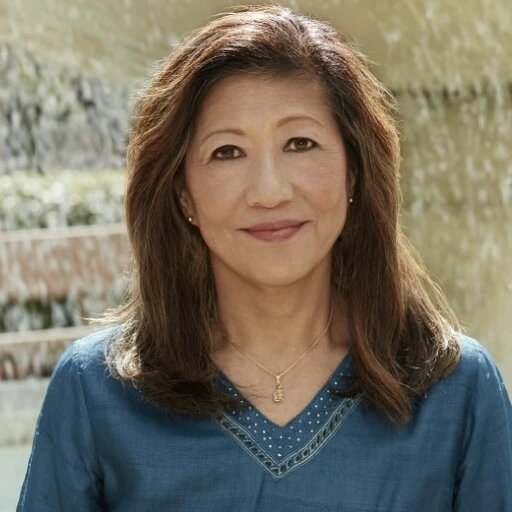
 

More about Kayoko Mitsumatsu

Prior to co-founding YGB, Kayoko Mitsumatsu, was a seasoned producer and director. She honed her craft with NHK, Japan’s National Public Broadcaster, where she spearheaded prime-time current affairs and documentary programs. Her global perspective is shaped by her diverse living experiences in Australia, Brazil, the United Kingdom, and the United States. Driven by a profound belief in documentary filmmaking’s power to connect cultures and amplify unheard voices, Kayoko founded YGB Films. For over a decade, she has dedicated herself to capturing the compelling stories of Yoga Gives Back’s fund recipients in India. Her films reveal the stark realities faced by underserved women and children, while also showcasing the transformative impact of Yoga Gives Back’s global community support. Through her lens, she brings to light the resilience and hope that flourish amid adversity, making an indelible mark on countless lives.


Via IMPAAKT is a global B2B business magazine that recognizes best companies, best practices and best leaders!

Midwest Transplant Spotlight – Kevin Calhoun

Celebrating Father’s Day: “A heart transplant allowed us to have our son.”


A heart transplant, an athletic competition, and a chance encounter that led to love are the elements of a great adventure, a life’s story, and a reason to celebrate Father’s Day.

In 2017, Kevin Calhoun traveled to Spain for the World Transplant Games. He’d had a heart transplant a few years earlier and was ready to compete in soccer and pétanque.

That same year, Kaci Keller was invited by a friend to support her at the World Transplant Games. Her friend asked “Do you want to travel with me? I want to go to Spain. I want to compete.”

Kaci said, “Yes, let’s go.”

Kevin lived in Kansas City and Kaci lived in Florida. They didn’t know each other but met at Team USA gatherings at the World Transplant Games, started talking and “kind of hit it off.” At the end of the week, it was time to go back home. Kaci shared part of a conversation with Kevin. “He said, ‘I didn’t come here looking for someone, but I like you. Can I call you when we get back to the states?’” They kept in touch with each other and within a year, they were engaged.

Now they have a family, and their son, Kyle, is 4.

“It’s such a blessing and we would not be here if it was not for the heart transplant that Kevin had and truly received the gift of life,” said Kaci.

“Kevin gets to celebrate Father’s Day because his heart transplant allowed us to have our son.”

“It’s the most fantastic thing in the world,” said Kevin. “Every day, I’m just amazed at our son’s smartness, creativity and his ability. I have my wife to thank, I have the Lord to thank, and my donor to thank. It sounds cliché but I until you’re a father, you really don’t know what it’s like.”

Kevin’s Heart Transplant Journey

In 2008, Kevin was diagnosed with cardiomyopathy – a disease of the heart muscle that causes the heart to have a harder time pumping blood to the rest of the body, which could lead to symptoms of heart failure.

For about eight years, he lived with the condition with medications, diet and a careful regimen. “But it pretty much got to a point where advanced surgery, or you know, a transplant was going to be needed,” he said.

“I waited a couple of weeks and that’s about when I received my gift.” He recalled the moment by saying he “prayed that night to God and just kind of asked, ‘Prepare me for whatever this is going to look like, that way, I can kind of psychologically get prepared.’ And then that same night, I fell asleep so hard, which you never do in a hospital. I was awakened by my nurses, and they told me that my gift of life was ready.

“It’s kind of hard to talk about, but pretty much that same night was when I got my answer and received my gift thanks to my donor and his family, and it’s been good.”

Thankful to Donors

Kevin Calhoun sincerely appreciates donor heroes and their families.

“I think the focus needs to be on donor families because of what they’ve gone through to lose someone very valuable and important in their life, for someone else to be given a chance, to keep carrying on.”

He has had some correspondence with the donor family but is sensitive to speaking about the donor hero and their family out of respect.

From what he’s learned about his donor hero, the family has “painted a really nice picture of what he was like. And he was a really stellar, independent human being and what he was doing with his life is fantastic. It’s just a shame that it got taken so shortly, which makes it kind of hard to receive the gift, but at the same time…thank you.”

Together, the Calhouns are volunteer Ambassadors who represent Midwest Transplant Network by sharing information and enhancing awareness of what it means to be a registered organ, eye and tissue donors.

Father’s Day Fun

The Calhouns will celebrate Father’s Day weekend with family.

“We have a big family reunion with a lot of family from out of town. There will be a lot of fathers hanging out. Kaci, Kyle and I will probably go to the park after church on Sunday to take Kyle fishing. He’s really been getting into it.”


via Blog/by Mitch Weber


ThE HEROES WHO DELIVERED AID AND COMFORTED THE DYING ON THE BATTLEFIELDS OF WORLD WAR I


Over 16 million total animals were in service during the Great War, with dogs hauling machine guns and supply carts, serving as messengers and delivering the all-important cigarette cartons to the troops.

However, Mercy Dogs, also referred to as casualty dogs, were specifically trained to aid the wounded and dying on the battlefield. First trained by the Germanic armies in the 19th century, these sanitätshunde, or medical dogs, began to see widespread use as World War I swept across Europe.


Trained to find and distinguish between the dead, wounded and dying, Mercy Dogs were set loose on the battlefield to bring medical supplies to the wounded, “getting as close as possible so the soldier could access the dogs’ saddle bags, which contained first aid supplies and rations. Instead of barking and alerting the enemy, the dogs were trained to bring back something belonging to the soldier,” 
according to the Red Cross.

The dogs were trained in triage, able to indicate who needed aid the most and who was too far gone to establish any medical care. In the case of the latter, the dog would often stay with the mortally wounded soldier to ensure that, in his final moments, he wasn’t alone.


via History.net


Historical Pictures

US Mail, 1912

Female firefighters in action in London circa 1916.

Five of the contestants in the 1924 Miss America contest walk together. Atlantic City, New Jersey, USA. July 1924.

Women trainees of the LAPD practice firing their newly issued revolvers, 1948


This Is Margaret Ann Neve At Age 110 In 1902.⁣ ⁣ She Was Born In 1792 And Died In 1903, Making Her The First Proven Person In Recorded History To Have Lived In 3 Different Centuries.

Cajun Wit and Wisdom: an interview with Ken Atchity Humor & Health Journal


After reading your book, Cajun Household Wisdom, I wanted to do an interview with you. I found the book very humorous as well as informative. Through the sayings, photographs, and stories the reader gets a genuine glimpse and flavor of Cajun culture and a lot of laughs. What motivated you to write the book?

As I grew up around my mother’s French Louisiana Family on a farm near Eunice I started collecting sayings and stories I heard from family members and other people in Louisiana. Especially the hunting stories and jokes my uncles told. I’ve always thought that the Cajuns have a unique way of looking at life and wanted to put it together in one place.

Let me mention some subjects and let you give an explanation of what they mean in Cajun culture.

Food

Cajuns are people who enjoy every moment of life. They aren’t city planners, architects, or engineers. They’re country people. Their thing is living in the moment. The greatest celebration of the moment on a daily basis is meals. Cajuns have an incredible zest about eating and putting their energy into food. They love texture, which is why they like spicy food and all kinds of food that has a lot of surface to it. Cajun philosophy center around the kitchen and around eating. As far as Cajuns are concerned, if you haven’t eaten with someone, you don’t know them.

Dance

Dancing is another example of living in the moment and celebrating life. What’s amazing when you go to Louisiana is that you see the oldest people dancing. People in there nineties will be out in the dance floor kicking up a storm. People of all ages go to the dance halls. So the dance hall is another place where Cajun culture comes together to celebrate the energy of life. One of the famous clubs is Fred’s in Mamou. If you walk in at 11 o’ clock on Saturday morning you’d find the place already hopping. The truth is that it’s all the people from the night before who are still there. Since there are no windows in the place no one has any idea or cares what time it is.

Coffee


Jokes, stories, and conversations are all a celebration of life and obviously the best place to do that is over a meal or a cup of coffee. Coffee is a central part of Cajuns culture. It’s a time to stop and talk. You don’t drink coffee while working.


Conversation

Cajuns like to talk and tell stories. One of my uncles in Louisiana still resents the telephone. He thinks that if people want to talk with you, they should drive over to your place. Then you’ll know it’s important and you’ll stop what you’re doing to have a talk.

As a kid I remember sitting on the front porch in rocking chairs and endlessly listening to my uncles, grandfather, and grandmother telling stories and talking. That’s what I go home to Louisiana for now. I need the fix- to be with people who know how to talk.

One time I went on a fishing trip with my Uncle Wib. We got up at three A.M. to go down to Grand Isle and we never stopped talking. We were supposed to get there by sunrise. At 10 o’clock I pointed that out. He said ‘Oh my God, I took the wrong road at Thibodaux five hours back.’ We were so deep in conversation that we forgot about everything else.

To Cajuns nothing is more important than communication. We get so busy in our modern world that we don’t really have time to talk with each other – everything is oriented toward efficiency and arranged in bytes. Just enough is said to get by. But to Cajuns talking is an art.


What is your next Cajun book?

It is similar to Cajun Household Wisdom except it’s about the kitchen and eating. It’s called Cajun Kitchen Wisdom and has recipes for smothered chicken, lima beans and lots more. It contains sayings that have to do with the kitchen. One is “If de gumbo is good, you can put up with de cook.’ It also presents fishing and farming stories. The thing about Cajun humor is that much of it is about fishing or farming stories. The White Mule stories are prime examples of farming tales.

One of my favorite White Mule stories will appear in the next book, Cajun Kitchen Wisdom.

It goes like this: A stranger walks into a bar in Abbeville and takes a seat. Halfway through his Jax, he pulls a huge tomato out of the paper bag he carried in, and sets it on the counter. The bartender sees him do it, but doesn’t even stop wiping his glasses. The man at the other end of the bar doesn’t come over either.

So the stranger asks, “Y’all see dis tomata?’

The other two men nod.

“Sacre blue du couyon,” the stranger says. “Have you ever seed a tomata as dis heah?’

The other two men move over politely to take a closer look. The man who was at the far stool lifts the tomato, palms it, smells it, rubs it, smells his finger, then puts it back on the bar. The bartender doesn’t even bother to do the same. He just exchanges glances with the other man.

“Well?’ demands the stranger.

‘Well, ah foh one siurley have,’ says the man from the other stool.

The stranger can’t believe his ears but the other man tells him to wait. He goes outside, then comes back in, straining as he carries the biggest, most gigantic tomato the stranger’s even seen in his life – it has to weigh over ten pounds! The man places the tomato on the counter, and the stranger can’t resist touching it, smelling it, stroking it’s skin. Sheepishly, he puts his tomato back into its bag.

“Okay,” he says to the man.

“You got ta tell me, yah. What is yo’ secret?”

“Did you see dat white mule tied up outside?” the other man asks.

“Yah, ah sawed it,” the stranger nods.

“Well it’s dat mule.” “Ah doan unnerstand,” says the stranger.

“Dere’s nuttin’ ta understand,” the other man explains.

“Everybod ‘roun heah knows about it” – he looks at the bartender, who nods for confirmation.

“When ah go out ta ready my ground for plantin’, dat white mule pulls mah plow. When ah’m plantin’, dat white mule pulls de cultivator- an’ when ah’m harvestin’ –“

“How much you recon’ you wan’ foh dat mule?” the other man breaks in.

“I had date mule foh ten years now,” the other man says. “Date mule’s not foh sale.”

“Ah’ll give you a hunnert dollars cash for dat mule raht now,” says the stranger, plunking the gold coins down on the counter.

The other man looks at the coins for a second. “A hunnert dollars?” he says.

“Sold!”

The stranger’s jubilant, but the man who sold the mule says, “Would you min’ if ah deliever him ta you in the mohnin? Dat mule was mah fren,’ and ah’d lake to let mah wife ‘n kids say good-bye to him properly.”

“No problem,” says the other man, and leaves the bar whistling.

But the first man got himself a real run of bad luck. First of all, he stays at the bar and gets caught in a bouree’ game- and lost the hundred dollars. Second of all, when he wakes up the next mroing, and went to his barn to get the mule ready to deliever he finds the mule dead as a doornail on the barn floor.

He felt real bad about that, real bad- especially because he didn’t have the hundred dollars to repay the stranger. But after awhile he got to thikin’ and realized that, as the saying goes, “a deal is a deal.” So he loaded the mule on his wagon, and headed for the other man’s farm. He parked the wagon down the road a bit and walked up to the house, where the man was waiting for him on his porch.

“I got some bad news for you, an’ some moh bad news,” the first man says.

“What’s de bad news?” asks the stranger.

“Well you ‘member dat hunnert dollars you gave me las’ night for det mule? Ah got mahself caught in a bouree’ game and ah done las de whole ting.”

“Well dat surely is bad news,” the stranger agreed. “Dat’s real bad news. Ah feel rela badly foh you, losing dat money, sha.”

“But the other bad news is dat the mule you bought – ah found him daid in mah barn dis nohnin.”

Now the stranger understood the gravity of the situation all too well, and why the first man felt so bad. But he got to thiking, and realized to himself, “a deal’s a deal.”

“Let me axe you a question, he finally said. “Whar is dat mule?”

The other man pointed down the road to the wagon. The stranger followed him so he could see for himself. After he was satisfied that it was the same mule he’d bought at the bar he helped the other man unload the mule.

“Jes’ leave him heah.” He said.

The first man said again how bad he felt about the whole thing, and drove off home with a heavy heart.

A few months went by before the first man had the nerve to go back to that bar in Abbeville for a Jax. But one night he did, and there was the stranger.

“Whar yo’ bin?” the sranger said. “I bin watchin’ foh you/”

“To tell ya de trewty. Ah felt so bad ‘bout losin dat money and dat mule dying an’ all, I didn’t have de noive ta see you again.”

“Doan feel bad no mod, the stranger said. “Ever’ting toined out okay.”

“Whatch you mean okay?”

“I held me a raffle and made me a good profit.”

“A raffle?”

The stranger nodded. “Yah, ah raffled off dat mule. Al sole me two hunnerty tickets foh one dollar each.”

“You raffled off dat daid mule, and you made two hunnert dollars?” The first man was amazed, “and you had all dose folds mad at you?”

“No,” the stranger smiled. “Jes’ one poison was mad yah. But ah gave him his money back!”

These are stories I love. They reflect the culture and the ingenuity of daily life. They say, “If you can find a simple way to do it, find a simple way to do it, find a Cajun and he’ll make it ten times more complicated and you’ll have a lot more fun along the way.”


Kenneth Agillard Atchity is the author of several books including Cajun Household Wisdom: You Know You Still Alive If It’s Costin’ You Money published by Longmeadow Press. At the time of this printing he’s somewhere between Breaux Bridge and Opelousas eating his way across his native state.

The Daily Routines of Famous Creative People


The daily life of great authors, artists and philosophers has long been the subject of fascination among those who look upon their work in awe. After all, life can often feel like, to quote Elbert Hubbard, “one damned thing after another” -- a constant muddle of obligations and responsibilities interspersed with moments of fleeting pleasure, wrapped in gnawing low-level existential panic. (Or, at least, it does to me.) Yet some people manage to transcend this perpetual barrage of office meetings, commuter traffic and the unholy allure of reality TV to create brilliant work. It’s easy to think that the key to their success is how they structure their day.

Mason Currey’s blog-turned-book Daily Rituals describes the workaday life of great minds from W.H. Auden to Immanuel Kant, from Flannery O’Connor to Franz Kafka. The one thing that Currey’s project underlines is that there is no magic bullet. The daily routines are as varied as the people who follow them– though long walks, a ridiculously early wake up time and a stiff drink are common to many.


Read more


When LA Review of Books Reviewed Dennis Palumbo's Night Terrors

The Criminal Kind: Dennis Palumbo’s "Night Terrors"


Night Terrors by Dennis Palumbo


NIGHT TERRORS, the third in Dennis Palumbo’s series featuring clinical psychologist Daniel Rinaldi, proves that there is more to a procedural mystery than mere procedure. A cunning reworking of genre conventions, it is consistently surprising and occasionally even subversive, undermining our expectations and challenging the fundamentals of procedural mysteries.


In his latest literary outing, Rinaldi is abducted in the night by the FBI and thrown into a case against his will. He’s been assigned to Lyle Barnes, a recently retired FBI agent who is suffering from a severe case of night terrors that has him on the brink of collapse. Barnes’s condition isn’t helped by the fact that he, too, is in the custody of the Feds. Barnes’s final job was helping to apprehend a serial killer of prostitutes, John Jessup, who recently died during a prison riot. Now, one of Jessup’s admirers — an anonymous letter writer known only by his signature tag, “Your Biggest Fan” — has been avenging Jessup’s death by murdering those responsible for his imprisonment. Barnes is high on the list. But before Rinaldi can begin the therapy, Barnes escapes, and it’s a race against time to find him before the “Fan” does. Concurrently, Rinaldi is pushed into yet another investigation when he agrees to meet the mother of Wesley Currim, a young man who has confessed to the brutal murder of a local businessman. Besides pleading guilty and leading the police and Rinaldi to the body, however, Currim has revealed no details as to how, or why, the crime was committed, or why he denies his mother’s alibi. Initially called in for his psychological expertise,


Rinaldi soon finds himself acting as detective more than therapist — a role far more dangerous than he anticipated.


Smartly structured with well-timed twists and revelations, Palumbo and his surprises are always one step ahead of the reader. Though at times dense on procedural exposition, Palumbo deserves high praise for playing so fairly with readers. His style is low on red herrings, out-of-the-blue clues, and last-minute rescues — the puzzle pieces are all there from page one, and while the way they fit together isn’t obvious, the conclusion is achieved naturally.


Whereas conventional mysteries can be seen as reasserting stability on an unstable world — uncovering the truth, righting wrongs, and asserting justice — Palumbo in Night Terrors repeatedly disrupts any notion of security. Fiendishly clever villains and feeble authorities are nothing new to the mystery field, but Palumbo approaches these stale tropes with a fresh perspective. So much of Night Terrors’s exposition is dedicated not to how the investigative process pieces things together, but rather how it frequently fails to. “They still don’t have squat, do they?” asks Barnes. “That’s ’cause they rely too much on procedure and modern forensics.” In this sense, Night Terrors is an anti-procedural. And whereas one would expect a professional specialist like Daniel Rinaldi to use his vocation like “magic” at key points throughout the narrative, Palumbo repeatedly denies any such narrative convenience. (Barnes, too, is apathetic toward Rinaldi’s attempts at psychology: “That’s just therapeutic bullshit.”) Palumbo challenges his character to move beyond the niche he has created for himself — a provocation that many series creators (and their protagonists) don’t often place themselves in.


Among the most distinguishing facets of noir is the way in which it responds to social conditions. Even in literature, crimes don’t happen in a vacuum. Economic desperation fuels the nihilism of James M. Cain and Horace McCoy’s 1930s novels, just as post– World War II discontent and malaise runs deep through the 1950s paperbacks of Day Keene and Harry Whittington. In Night Terrors, Palumbo reacts to a distinctly post-economic-collapse American geography:


Unlike Pittsburgh, whose seventeen miles of steel works had been torn down, victims of the economic cataclysm that ultimately revitalized the city, towns like Braddock had no reason to dismantle their dying mills and factories. Nothing was going to take their place.


And in retired FBI agent Lyle Barnes — at one point the grand protector of the country — Palumbo sees a fractured, shaken consciousness that hasn’t been pieced together again.


Clinicians are blaming the unusual rise in adult symptoms to the uncertainty of contemporary life. The economy, terrorism. Even the recent natural disasters. Tsunamis. Earthquakes. The daily anxiety suppressed by adults during waking life, later invading their sleep.


Palumbo may state his theme obviously, but he’s not trite about it, nor does he pretend that Rinaldi could solve these paramount issues. Once more, Palumbo contests the notion of the fix-it-all detective in favor of one whose wisdom lies not in his power, but in his powerlessness.


¤


Cullen Gallagher regularly reviews noir novels and anthologies for LARB.


LARB CONTRIBUTOR

Cullen Gallagher lives in Brooklyn, New York. His writing has appeared in many publications including The Paris ReviewBrooklyn Rail, and Not Coming to a Theater Near You, as well as in the anthologies Cult Cinema: An Arrow Video Companion (2016), edited by Anthony Nield, and Screen Slate: New York City Cinema 2011–2015 (2017), edited by Jon Dieringer. He blogs about crime fiction at Pulp Serenade (www.pulp-serenade.com).